Their room, tonight
Is mold dangerous for kids?
Updated 2026-09-28 · Written with Ava, the ClearNest guide
Mold is dangerous for kids when they breathe damp, contaminated air for hours, especially if they already wheeze, cough, or have allergies. A speck on a dry toy is not the same as a wet wall beside the crib. Move them out of the worst room tonight, tell their doctor if breathing is hard, and fix the water and the air path so the room they go back to is actually dry.
You can't see most of it. A clean-looking home can still hide moisture behind the walls and in the ducts. The way through is a plan, not a scare.
The question under the question
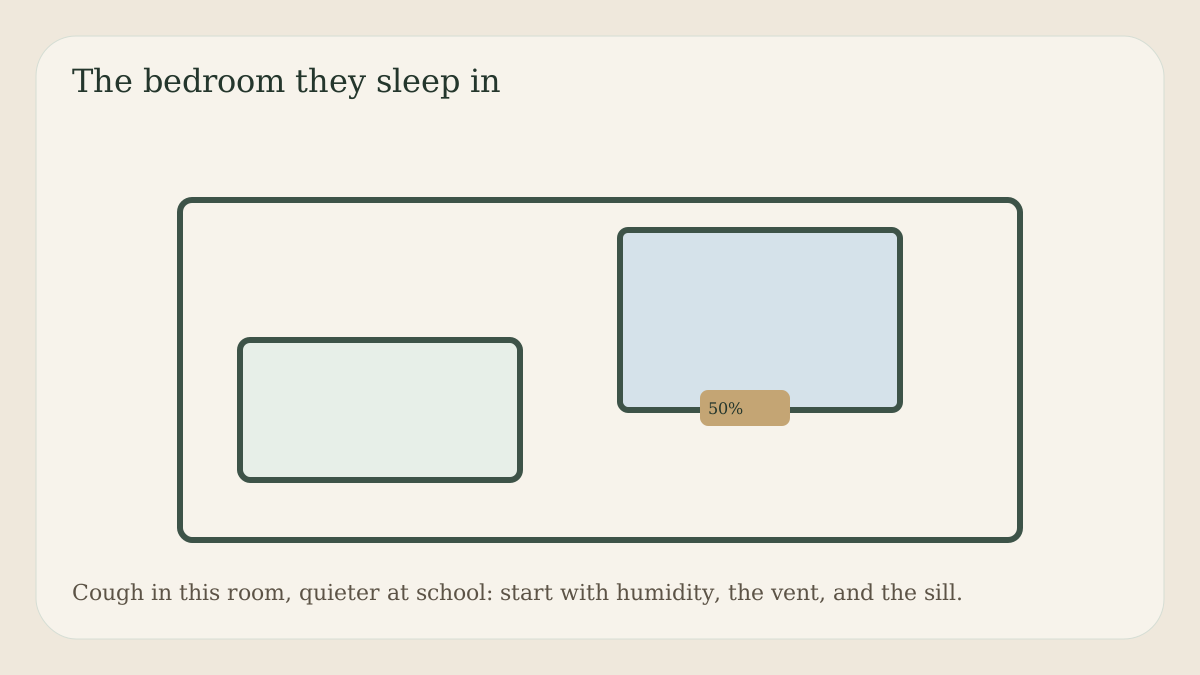
You are not asking for a lecture on fungi. You are asking whether the room your child sleeps in is hurting them. Maybe they cough after lights-out and walk into school fine. Maybe you wiped a windowsill and the smear came back. Maybe you feel guilty for not noticing sooner. Guilt does not dry a wall. A sequence does.
Is mold dangerous for kids? It can be, in the ordinary way damp houses are hard on small airways. Health agencies link damp indoor spaces with cough, wheeze, and upper-airway irritation. Children live in one room for a third of the day. They put their faces near the pillow, the stuffed animal, the cold corner you shoved the crib against so the outlet would reach.
What raises the stakes
A spot you can cover with your hand, on a hard surface, in a room that is dry, is a cleaning job after you know why it grew. A soft wall, a ceiling that bows, a closet that smells like a basement, or growth around a supply vent is a different night. So is any child who is working to breathe, wheezing, or getting worse. That child needs a clinician. The house project runs beside that, not instead of it.
Infants and kids with asthma deserve the more protective version of the plan: sleep somewhere else in the house, or somewhere else entirely, until the wet material is gone and the humidity in their room holds under about 50 percent.
Tonight, in the room they use
Do these in order. Skip the part where you research species names until 2 a.m.
If the patch is larger than about 10 square feet, if it is on the back of drywall, or if it is inside the heating system, stop and call a remediator. Do not put a child back into a room you fogged with a store spray. Those products are not a cleanup.
Hope is a dry room they can sleep in
You are allowed to be the one who insists. The assessment asks where the smell and the symptoms sit, including kids' rooms, and the $99 protocol turns that into seven steps you can hand to a partner: seal the returns, dry the humidity, document the photos, and stop guessing. Ava stays with the member side of that plan so you are not alone with a tab at midnight.
If this is your house, the free 60-second check names the rooms. Ava turns what you can't see into an order you can finish. The protocol is $99 once the plan is on the screen.
You can't see it. You can still change it.
The air behind the walls has a protocol.
A clean-looking room can still feel wrong. The free check names your rooms and a plan. The protocol is the calm order after that.
Start free 60-second check- 14-day refund if it isn't useful for your home.
- Educational home guidance, not a diagnosis or a lab test.
- Answers stay on this device. Privacy
Already named your plan? Unlock the protocol
Common questions
Should I throw away their stuffed animals?+
If a toy was in a wet closet or smells musty, wash what can be washed in hot water and dry it completely. Porous toys that stayed damp belong in the trash. A toy from a dry shelf is not an emergency.
Can kids get mold allergies from the house?+
They can react to damp-house allergens with sniffles, cough, and itchy eyes, and those can overlap with colds. A pediatrician should sort a child who coughs for weeks. You can lower the damp while you wait for that visit.
Is a little mold on the windowsill enough to hurt them?+
A recurring wet sill is enough to take seriously, especially beside a bed. Clean the small hard surface, stop the condensation, and watch whether the cough stays with the room. Read the [windowsill guide](/guides/black-mold-on-windowsill) if that is the spot you found.
Keep reading
Educational home guidance, not a diagnosis or a lab test. ClearNest does not treat illness. Read the full disclaimer.
 Talk with Ava